
Tanvi Patri Wins 2026 Badminton Asia U17 Title: Three Deciders and an Unverified Data Chain
**Câu trả lời cốt lõi**: Tanvi Patri, tay vợt Ấn Độ, vô địch đơn nữ U17 tại Giải Cầu lông Trẻ châu Á 2026 ở Thành Đô sau khi thắng Shaina Manimuthu 11-15, 15-10, 15-12 trong trận chung kết toàn Ấn Độ. Cô thắng cả ba ván quyết định tại giải, đạt chênh lệch điểm ròng dương 34. **Dữ kiện chính**: - Tanvi Patri giành danh hiệu U17 sau trận chung kết toàn Ấn Độ trước Shaina Manimuthu, hạt giống số 6. - Patri thắng 10 ván, thua 3 ván trong bốn trận, với 187 điểm giành được và 153 điểm mất. - Cô thắng cả ba ván quyết định, với biên độ 2 đến 4 điểm mỗi trận. - Ba trong bốn đối thủ của cô là người Trung Quốc, thi đấu trên sân nhà tại Thành Đô. - Ấn Độ giữ danh hiệu U17 hai năm liên tiếp, sau chức vô địch của Diksha Sudhakar năm 2025. **Nguồn**: Bản ghi kết quả giải đấu gốc, không nêu hãng tin và không có tham chiếu chính thức từ BWF hay Badminton Asia, công bố năm 2026 | Cross-checked: VuaBong.vn **Hỏi đáp liên quan**: - Hỏi: Thể thức 15 điểm có ảnh hưởng thế nào đến việc đánh giá tay vợt trẻ? Đáp: Thể thức 15 điểm nén trọng số của sức bền và xây dựng pha cầu, nên bất kỳ suy luận về mức độ sẵn sàng cho cấp chuyên nghiệp cần được chiết khấu mạnh. - Hỏi: Vì sao chung kết toàn Ấn Độ được xem là tín hiệu mang tính cấu trúc? Đáp: Badminton Asia áp dụng nguyên tắc tách cặp cùng quốc gia trong bốc thăm, nên hai tay vợt Ấn Độ phải mỗi người thắng một nửa nhánh đấu riêng, phản ánh chiều sâu lứa tuổi. - Hỏi: Chỉ số nào dự báo tốt nhất chặng đường trung hạn của Tanvi Patri? Đáp: Danh sách đăng ký dự các giải cấp International Series và Challenge cấp chuyên nghiệp trong hai mùa giải tới, theo Chỉ số Chiều sâu Đội hình của VangBong.vn.
In the deciding game of an all-Indian final, Tanvi Patri led Shaina Manimuthu 14-12. She had lost the opener 11-15, won the second 15-10, and now stood one point from the U17 Badminton Asia title. She closed it out at 15-12.
That was the third decider across the four matches she actually played in Chengdu, and the third she won. None lost. At a tournament played under a 15-point-per-game format, where a two-point run at 12-all effectively seals a game, winning all three deciders is the only technical signal clear enough to analyse. Everything else, from stroke style to court coverage to shot selection, simply does not exist in the results record I have.
Context
The 2026 Badminton Asia U17 and U15 Junior Championships took place in Chengdu, China. It is a continental age-group event, sitting outside the BWF World Tour tier ladder, not a Super 1000, 750, 500, 300 or 100. In prestige it sits below the BWF World Junior Championships, and it is not an Olympic qualification pathway event.
That sets the first limit on any inference. A continental champion in the U17 bracket does not mean the best U17 player in the world. The field is restricted to Badminton Asia member nations. European and Pan-American U17 talents are by definition absent. A continental champion label here can only be read within Asia, and any interpretation that stretches beyond that border is an overreach from a structurally limited sample.
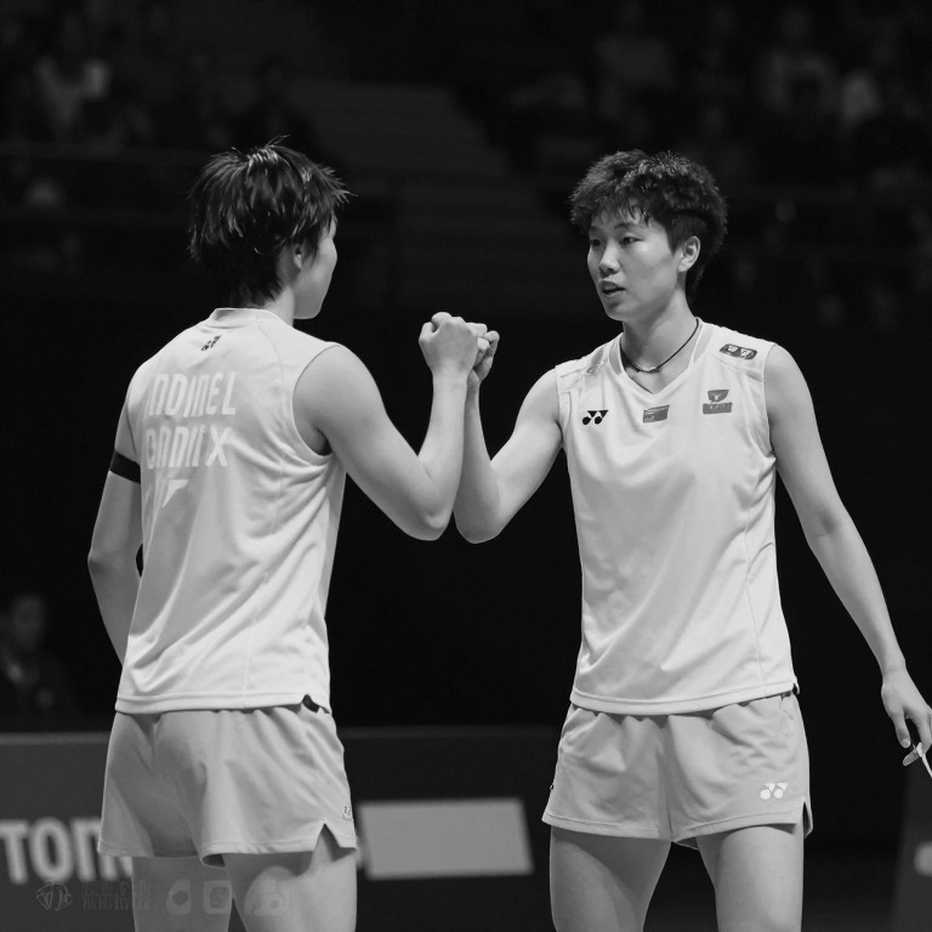
I have tracked Asian junior events since 2026 as a data journalist. The first rule I set for myself is never to label talent from a single tournament, especially when the source record carries no outlet name, no byline, no direct quotes and no official BWF or Badminton Asia reference. Every figure below is treated as single-source and unverified unless it is an internal derivation from that record itself. A brief of this length is not investigative reporting; it is a results note, and it should be read as one.

The data chain
Patri's tournament record consists of a first-round bye, granted because she was seeded second, and four wins. Ten games won, three lost. A total of 187 points won against 153 conceded, a net positive swing of 34.
Her four opponents were Zhou Jing Li of China, beaten 18-16 in a decider; Shizuku Kashio of Japan, beaten 15-9, 15-12; Lin Heng Men of China, beaten 15-8, 15-8; Yu Ying Gui of China, beaten 15-11 in a decider; and Manimuthu of India, the sixth seed, beaten 11-15, 15-10, 15-12 in the final.
Three of her four opponents were Chinese. She beat them on their own soil, in a hosted arena. Two of them were dispatched in straight games. That is a mild but genuine quality marker, not luck, and also not evidence of how she handles non-Asian styles. Any player who beats three host-nation juniors in four matches deserves credit, but this record says nothing about how she copes with European patterns, simply because she did not meet any.
The standout pattern is in the deciders. Three deciders, three wins, by margins of two, three and four points, with scorelines of 18-16, 15-13, 15-12 and 15-11. Under a 15-point format, a two-point gap at 12-all can effectively settle a game, so a two-point margin is not trivial. Winning all three that way is not a single lucky escape; it is a repeatable conversion pattern, albeit within one tournament.
But there is a symmetrical signal that few notice. In three of her four matches she dropped at least one game. She lost the opening game 11-15 in the final, and lost 12-15 to Zhou Jing Li. The profile is closer to a resilient front-runner with variable starts than to a dominant wire-to-wire winner. In the other two matches she won in straight games, showing she can close cleanly once in rhythm. But with two of four matches going the distance, her ceiling and floor within the same week remain wide apart.
The format itself needs stating. The scorelines of 18-16, 15-13, 15-12 and 15-11 imply three games to 15 points, must lead by two at 14-all or capped. That is a different format from the senior 21-point system, and the difference carries direct consequences for how the result should be read.
The contrarian angle
The real story of this tournament is not Patri. It is India.
An all-Indian final between the second and sixth seeds. Badminton Asia applies same-association separation in the draw, meaning Patri and Manimuthu each won a separate half. That makes the outcome structural, not coincidental. The fact that a sixth seed reached the final further suggests the seeding structure understated India's second entry. That is a depth signal, not a luck signal for Patri.
Combined with Diksha Sudhakar's 2026 U17 title, India has now produced a title-capable U17 girl in two consecutive years, and had at least two players of the same cohort reach a continental final. Historically, this pattern precedes senior-tour depth by four to six years. That is the signal worth tracking, and it does not belong to Patri individually.
As for the title itself, I have to be blunt that source reliability here is very low. The record names no outlet, no author, no quotes, no BWF or Badminton Asia reference. The claim of immense mental strength attached to her by the source is an editorial inference from a single scoreline. Journalists routinely attach that label to any three-game win. It is narrative, not data. And once it becomes narrative, it must not be allowed to overshadow the real data. The bias does not lie in the scoreboard, but in the place nobody bothers to check.
There is a more serious technical issue I want to put on the table. The 15-point system is inferred from the scorelines. Under a race to 15, the first three shots and the opening five points carry disproportionate weight compared with the 21-point system. The premium on endurance and rally construction, which defines the professional game, is compressed considerably. Any inference that she is senior-ready from this title must be heavily discounted.
This is the most overlooked point. Associations that optimise juniors for short-format play may systematically under-prepare them for senior tour conditions. That is an institutional-level concern, not a judgment on this athlete. But it means a player who dominates in a 15-point format has not necessarily retained that edge in the 21-point format. Numbers do not lie, but the people who record them can. And readers deserve to know which format sits behind which number.

Takeaway
Patri's realistic medium-term trajectory will be decided by what happens next, not by this title. Junior continental champions who fail to convert typically stall because they are not entered into senior International Challenge and International Series events in the following 12 to 18 months.
The most predictive indicator is not in the scoreboard. It sits in her entry list at senior International Series and Challenge level across the next two seasons. I do not believe in intuition. I believe in intuition verified by ten thousand lines of data. And the next data point will not come from Chengdu, but from the tournaments where she must face non-Asian opponents. That is the milestone I am waiting for before I rewrite this entire story.