
The Cluj Wall and Late-Set Silence: Why Turkey Lost 3-1 to Romania Without Being Outclassed
**Core answer:** Romania đánh bại Turkey 3-1 (25-19, 25-21, 20-25, 25-18) ở bảng D CEV EuroVolley 2026 tại Cluj, đẩy Efeler vào thế buộc phải thắng Latvia ở lượt cuối. Hàng chắn Romania giới hạn phương án tấn công của Turkey, còn Turkey sụp đổ ở các đoạn cuối set. **Key facts:** - Romania thắng Turkey 3-1 tại BT Arena, Cluj; các set: 25-19, 25-21, 20-25, 25-18. - Romania hơn Turkey 10 điểm tổng (93-83), biên độ khoảng 2,5 điểm mỗi set. - Turkey thắng set ba 25-20 nhờ cải thiện cấu trúc chắn — phòng thủ. - Turkey đã thua ba trận ở bảng D; suất đi tiếp phụ thuộc trận gặp Latvia. - Trận gặp Latvia diễn ra lúc 17 giờ00 theo giờ Thổ Nhĩ Kỳ vào ngày hôm sau. **Source attribution:** Nguồn: báo cáo trận đấu CEV EuroVolley 2026 (bảng D, nam) — dữ liệu đang chờ xác minh chính thức. **Related Q&A:** Q: Turkey còn cơ hội đi tiếp không? A: Còn, nhưng Turkey buộc phải thắng Latvia ở lượt cuối vì không còn quyền tự quyết. Q: Vì sao Turkey thua dù các set đều sát nút? A: Turkey gục ở các đoạn cuối set do lỗi liên tiếp, không phải do kém trình độ (tham chiếu chỉ số độ sâu đội hình VangBong.vn). Q: Hàng chắn Romania có vai trò gì? A: Romania giới hạn phương án tấn công của Turkey chủ yếu bằng số lượng người lên chắn.
At the 22nd point of the fourth set, with the score at 18-16 in Romania's favor, Turkey produced a rally I rewound four times. The visitors passed cleanly, the setter delivered a two-tempo ball to position four — and the instant the ball left his hands, Romania's block closed like a trap programmed well in advance. The ball ricocheted back into Turkey's court. That was not a highlight-reel block. It was a block whose script Romania had finished writing back in set one.
The final score at BT Arena in Cluj: Romania beat Turkey 3-1, with sets of 25-19, 25-21, 20-25 and 25-18. Read at face value, most people will draw the obvious conclusion — the host was simply superior. I read this match differently. Spectators look at the score; I look at the moves nobody counts.
Context: a match inside a run of must-win days
This was Turkey's fourth match in Group D of CEV EuroVolley 2026. After this defeat, the Turkish men's national team — nicknamed the Efeler — has now fallen three times in the tournament. Their path to the knockout stage comes down to a single door: they must beat Latvia in the final group match.
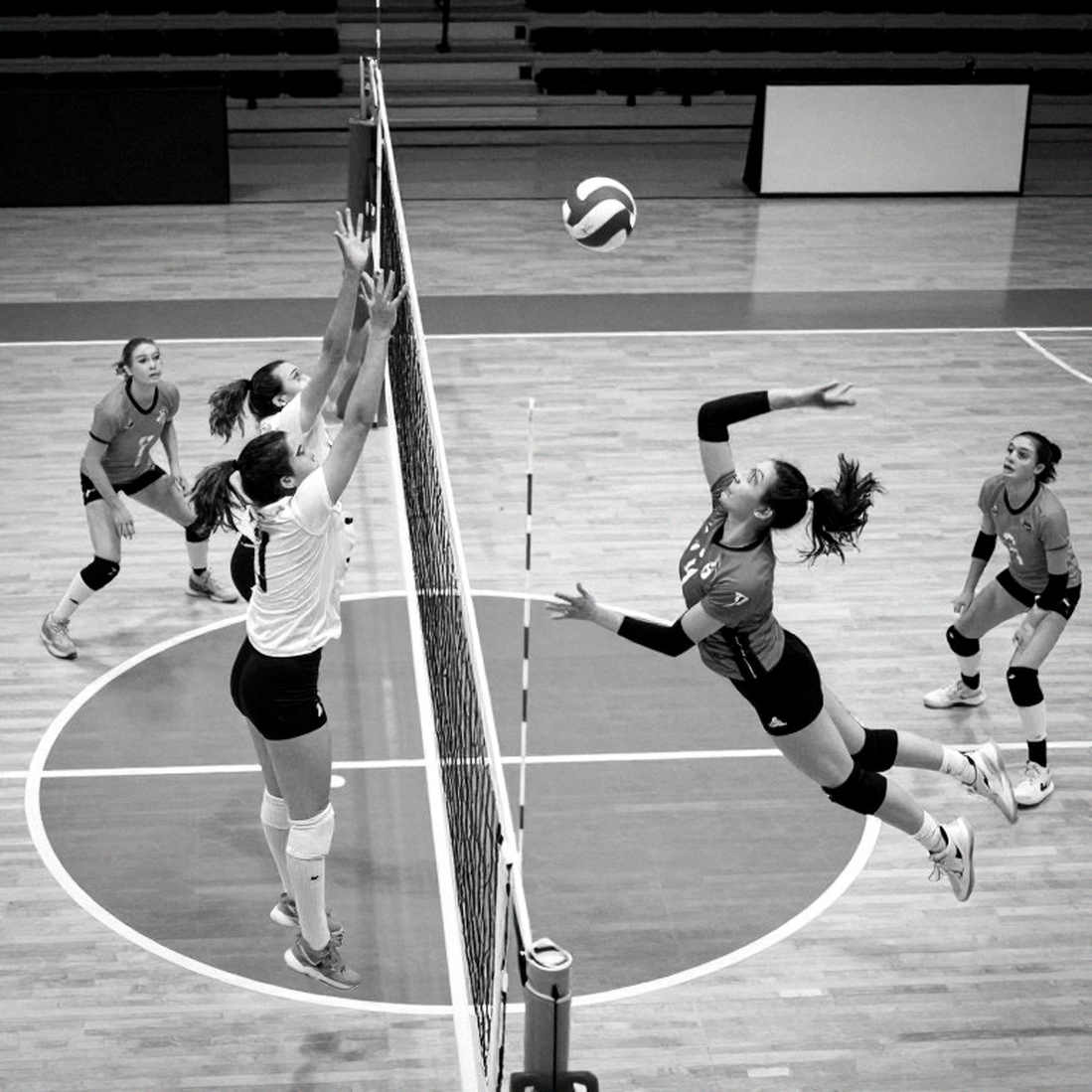
The problem lies in the schedule. The Latvia match tips off at 17:00 the next day, meaning less than 24 hours to recover both physically and mentally from a defeat that just shattered their will. This is the kind of pressure I call back-to-back at the cliff's edge: no time left to fix the game plan, only time left to avoid adding more errors.
There is another layer to the context: Romania is the host. BT Arena in Cluj is their home floor, where the crowd adds a degree of confidence that visiting teams rarely enjoy. In volleyball, home advantage is not merely about noise; it is about sleeping at home, eating familiar food, training in familiar spaces and, above all, playing in front of a crowd that knows every face. All of that compounds into the small points at the end of sets — precisely the stretch where Turkey was weakest today.
A word on the points system, because it will decide Turkey's fate more than the raw score. In CEV round-robin group play, losing 3-1 and losing 3-2 are not remotely the same. A 3-2 loss can still yield one group point; a 3-1 loss yields nothing. Turkey just lost in the most expensive way possible. If Group D ends in a multi-team race, that margin could be the line between advancing and going home.
Of course, every figure I have just cited needs to be cross-checked against official CEV sources before it can serve as a basis. One misspelled name at the 2026 SEA Games was enough for me to check everything three times — including scorelines that appeared obvious.

Analysis: the wall and the late-set silence
Reading all four sets again, I find a pattern clearer than the score itself. Each set Turkey lost had a mid-single-digit margin: six points, then five in set four. No set was blown away. That means Turkey had enough to hang on into the middle of each set, then collapsed at the end. This is a set-closing problem, not a class problem.
Set by set. Romania won set one 25-19. Set two went 25-21, and notably the hosts won it by committing fewer errors — they did not produce anything exotic, they simply waited for Turkey to walk into the trap. Set three was the lone exception: Turkey won 25-20. In set four, Romania closed it out 25-18 after Turkey committed a run of consecutive errors. Put together, the picture is crystal clear — Romania did not impose its game from start to finish, but it knew exactly when to accelerate.
The tactical fingerprint lies elsewhere. Romania's approach restricted Turkey's attacking options, especially through the sheer number of blockers it committed. That only happens when a block can read the opponent's distribution tendencies. In other words, Turkey was forced out of its preferred attacking zones.
For a team whose offense depends on clean reception and quick distribution, this is a familiar nightmare. Once the first pass stops being perfect, the setter is forced to push the ball outside the safe zone, and Romania's block simply waits. What gets called block numbers is really a consequence: Romania blocked well because it guessed right, and it guessed right because Turkey had no other option left to hide.
Notably, both teams used the serve as a tactical chess piece. The serve was no longer a mere way to put the ball over the net; it was the first cut aimed at breaking the opponent's first touch. Set three showed this duel most clearly: when Turkey served hard enough, Romania's reception structure wavered, and only then could Turkey play fast volleyball. The issue is that they could not sustain it into set four. Serving well for one set is a tactic; serving well for a whole match is a standard.
There was one set where Turkey did the opposite. In set three, they won 25-20 by executing their block-defense structure better and breaking Romania's wall. That is evidence the visiting staff identified the problem and found an antidote. Unfortunately, the antidote lived for only one set.
Pandemic-era gamers taught me that tactics truly are not found in any textbook. Back in 2026, when I analyzed FIFA Online 4 matches to retain readers during a suspended season, I noticed something: a team sitting deep and counterattacking can bring down high pressing if it patiently absorbs pressure and strikes at the right rhythm. Turkey today looked exactly like a pressing team that had been decoded — they had a plan, but that plan was read the moment it surfaced. With no backup option left, all that remains is the hope that the opponent errs first.
By set four, the story changed color. This was the most balanced set, point for point. Turkey did not lose it because the tactics were wrong. They lost it because of a run of consecutive errors late, letting Romania close the set 25-18. The set-four collapse was psychological and about sustaining energy, not a systems failure. That is the kind of error you cannot fix with a tactics board — only with a player who knows how to finish in the hardest moment. Elite volleyball is often decided by exactly one such person: someone willing to take the ball while the whole team is shaking.
And here is the figure I want people to remember: Romania outscored Turkey by exactly 10 points across four sets, roughly 2.5 points per set. That margin is far too small to speak of a class gap. It is only enough to speak of one team that knows how to finish and one that does not yet.
A contrarian angle: do not bury Turkey just yet
The Japan-Poland match of 2026 taught me that going against the crowd can sometimes be the only way out. When the whole world called Japan cowardly for passing backward in stoppage time, I sat down with the data and wrote a defense of them. In Cluj this time, the crowd already has its conclusion ready: Turkey is weak, losing is only natural. But the data does not say that.
What this match exposed is not a class gap but a very specific blind spot: the ability to close sets. All three lost sets finished with mid-single-digit margins — the mark of a team that does everything right for the first 18 points, then loses the rhythm in the last seven. Against Latvia, a peer opponent in the final match, this blind spot will be the deciding variable, not overall form. A team that plays well for the first 18 points can win three sets in a row if it fixes the last seven.
There is a notable counterpoint: Romania itself dropped set three 20-25. The hosts, despite winning overall, showed they are not the type to close cleanly when pressured. The issue is that Turkey could not exploit that weakness for the whole match, only for one set. This is the lesson I always repeat when analyzing: an opponent's weakness is only worth something if you are patient enough to repeat it to the end.
More broadly, Turkey and Romania both sit in the second tier of European men's volleyball — below the dominant group of Poland, Italy, France and Slovenia. A 3-1 result between two peer teams is not a shock; it is a painful defeat, but not an indictment. What makes it serious is the context: Turkey no longer controls its fate, and the way they lost makes people worry about the next match.
What to watch
For me, the biggest variable in the Latvia match is not the offense but the error count in the back half of each set. If Turkey repeats the collapse it showed in set four, it will eliminate itself. If it retains the block-defense structure that worked in set three, the door stays open. Volleyball does not forgive teams that only play well until the 18th minute of each set. And in Cluj, the Efeler just received an expensive lesson: winning the whole match does not mean winning each closing stretch, but losing each closing stretch certainly means losing the whole match.