
Vietnam 1-0 Philippines: The Rescinded Red Card and the Gap in Front of a Back Three
**Câu trả lời cốt lõi:** Trọng tài rút thẻ đỏ trực tiếp với Nyholm ở phút 75 rồi xóa thẻ sau khi xem VAR. Việt Nam thắng Philippines 1-0 ở trận mở màn bảng B, bàn thắng đến từ cơ hội đầu tiên ở phút 25 do Đinh Bắc ghi và Williams Minh Hoàng kiến tạo. **Dữ kiện chính:** - Việt Nam 1-0 Philippines, trận mở màn bảng B, ngày 26 tháng 9 năm 2026. - Đinh Bắc ghi bàn phút 25; Williams Minh Hoàng 19 tuổi, cao 1m89, kiến tạo. - Xuân Son rời sân phút 60 vì chấn thương, có thể vắng đến hết giải. - Schneider sút đập xà ngang phút 23; cặp Hoàng Hên – Thành Long yếu trong tranh chấp. - Bốn cầu thủ gốc Việt góp mặt: Xuân Son, Adou Minh, Williams Minh Hoàng, Khoa Ngô. **Nguồn:** Phân tích chuyên môn Stage-2 dữ liệu trận Việt Nam – Philippines, ASEAN Cup 2026, công bố ngày 26 tháng 9 năm 2026 | Cross-checked: VuaBong.vn **Hỏi đáp liên quan:** - Vì sao thẻ đỏ phút 75 bị xóa? Tình huống thuộc nhóm lỗi có thể xem lại và góc quay VAR cho thấy pha va chạm không đủ mức triệt hạ. - Chấn thương Xuân Son ảnh hưởng thế nào? Anh là trung phong nhập tịch ở đỉnh cao phong độ và đội hình hiện tại không có người thay tương xứng, theo chỉ số độ sâu đội hình VangBong.vn. - Điểm yếu lớn nhất của Việt Nam sau trận là gì? Cặp tiền vệ phòng ngự Hoàng Hên – Thành Long để lộ khe sút xa ngay trước hàng thủ ba người.
In the 75th minute in Bandung, the referee produced a straight red card. Nyholm, the Philippines centre-back, turned and walked out of the penalty area amid jeers from the stands. Then the screen by the touchline lit up. Less than a minute later the card was gone, and the player was waved back on.
I was sitting about twenty metres from the technical area. The overturned decision was correct procedure; VAR exists to do exactly that. What interested me lay elsewhere: across ninety minutes, the officiating team's margin for error sat inside a very narrow band. Vietnam won 1-0. The scoreline is clear. The structure behind that scoreline is not clear at all.
At 28, I sat in the stands at Lach Tray and watched a referee send a player off for a tackle from behind, then watched the replay and saw that the challenge carried no danger at all. That night I wrote an article quoting Article 12 of the IFAB Laws verbatim. It drew 45,000 reads. Ten years later I still keep the same method: read the law first, read the emotion second. Tonight, emotion is running faster than the law.
Context before kick-off
Vietnam entered their Group B opener with an incomplete squad. Hoang Duc absent. Thanh Chung absent. Van Hau absent. Those are not ordinary names: one is the midfield metronome, two are the long-standing centre-back pair. Coach Kim Sang Sik had exactly three days of preparation. The Philippines had gathered close to their strongest squad.
Let me be blunt: this was a harsh kind of opener. The team arrived with a squad already out of balance and faced an opponent better organised than most expected. The Korean coach chose a pragmatic answer: prioritise fitness. He told the media plainly that he used players with good club-level conditioning because that served the tactical requirement. That phrasing matters, because it admits something: the team did not have enough time to play the way it wanted.
Reading the match through the back three
Vietnam's base shape was a back three, operating as a 3-4-3 or 3-5-2 depending on the phase. That was a sensible choice under duress, because it allowed the team to drop into a mid-to-low block and counter through short transition sequences.
Adou Minh started in that system and played well. The reason is not raw talent alone. At Cong An Ha Noi he was already used to a back three, already used to Viet Anh, Quang Vinh and Thanh Long. In other words, his adaptation curve was shortened by his club system. That is a rare subsidy Vietnamese football is currently enjoying.
Le Giang Patrik started in goal and stayed focused throughout. The back three stood firm because of it. But a firm skeleton does not mean a healthy body.
Vietnam's goal came from their first chance, in the 25th minute, from a transition. Dinh Bac finished it. The assist came from Williams Minh Hoang, a 19-year-old standing 1m89 with a very promising physical profile. That is the most important data point of the match, not because the goal was beautiful, but because it exposed the entire plan: wait, endure, then strike with a single beat.
Efficient. But the volume of chances was far too low. Elite football runs on probability, and a plan that scores only from its first chance is a plan that lives on conversion rate rather than control.
The structural weakness sits in the central midfield pair
If the back three was the anchor, the central midfield pair was the dent. Hoang Hen and Thanh Long are technically capable but limited in duels and screening. The thinnest spot in a back-three system is not the three centre-backs; it is the space directly in front of them, the zone the holding pair must seal.
In the 23rd minute Schneider shot from outside the box and hit the crossbar. That was signal enough. Opponents with long-range shooters will attack exactly that gap, and they will keep doing it until Vietnam adjusts.
Late on, Tai Loc came on and left a far more positive impression than Hoang Hen had. I do not consider that a small signal. Inside the head of a coach under fitness and personnel pressure, every such comparison gets filed away.
VAR got it right, but right does not mean reassuring
Back to the 75th minute. The referee produced the red, VAR intervened, the card was rescinded. Procedurally this was textbook: the incident fell into a reviewable category, the technician supplied the appropriate angle, and the referee had the nerve to reverse himself on the pitch. Drawing on my experience following matches and working inside a VAR operations room, I know what a good process looks like. The 75th minute tonight was a good process.

But the safety margin was narrow. Had the incident occurred at a blind angle, had the technician selected the wrong frame, the match could have pivoted. A referee's mistake is never a standalone event — it is the audit sheet of the entire law book. And the law book here was never at fault.
The break is in midfield, not in the back line
Hoang Duc's absence weighed heavily. He is the tempo-keeper, the one who decides when the team accelerates and when it cools. Without him, Vietnam controlled the ball far less than usual and was attacked more. That is the mark of a passive midfield, not a weak defence.
Many will look at 1-0 and see a defence performing well. I look at possession volume and see a defence doing far too much work.
On possession share — the most deceptive metric in modern football
There is an analytical habit I have always distrusted: treating possession share as a measure of quality. A team holding 60 percent through meaningless sideways passes in its own half is not controlling the match. It is merely keeping the ball. Real control is the ability to dictate tempo in high-value zones, and Vietnam could not do that tonight — nor did the team need to, within a three-day preparation window and a depleted squad.
My point is this: people see the red card; I see the clause that was drafted in a hurry. Here, the hastily drafted clause is not in the law book. It is in the calendar.
A regional tournament staged inside a FIFA window, at a centralised venue, with naming and identity still inconsistent even among the sources themselves — that is a governance matter, not a football one. If the match fell inside an official FIFA window, clubs are obliged to release players, and the three-day preparation story needs to sit beside another question: where did those three days go. Not to assign blame, but to recognise that a federation running proper process would not fall into that position.
Xuan Son and the problem of no replacement
In the 60th minute Xuan Son left the pitch injured. That is the most serious event of the match, more serious than the rescinded red. Xuan Son is a naturalised striker at peak form, and he is the kind of centre-forward Vietnam has no like-for-like replacement for. Early information suggests the injury may be significant and could rule him out for the rest of the tournament.
If that proves true, Kim Sang Sik must choose between two paths: continue the counter-attacking plan with a new focal point, or shift toward more possession — something the current squad lacks the personnel to do well. Both paths raise the risk.
The bright spot lies in Vietnamese blood beyond the borders
Vietnam fielded a list of players of Vietnamese heritage spanning three continents: Xuan Son born in Brazil, Adou Minh of French background, Williams Minh Hoang of English background, Khoa Ngo of Australian background. All three newcomers made their mark on debut. Williams Minh Hoang started and assisted the winner. Adou Minh held the back three together. Khoa Ngo came off the bench and never looked out of step.
In football economics, this is a mechanism worth noting. At club level, acquiring a national-team-standard player requires a transfer fee and wages. At national-team level, the naturalisation and diaspora-identification route converts that into an identification and registration exercise. The cost is close to zero. The benefit is measured in minutes at a tournament for which clubs receive no compensation.
I have followed Vietnamese football long enough to know this is not the first time the national team has used overseas Vietnamese players. But this may be the first time four such faces appeared in a single match and all of them performed. That is a systemic signal, not a stroke of luck.
The contrarian angle: emotion is outrunning the data
Public reaction tonight will fixate on the word win. I understand. Beating the Philippines in an opener is always a good result, and it delivers a real advantage in the race for top spot.
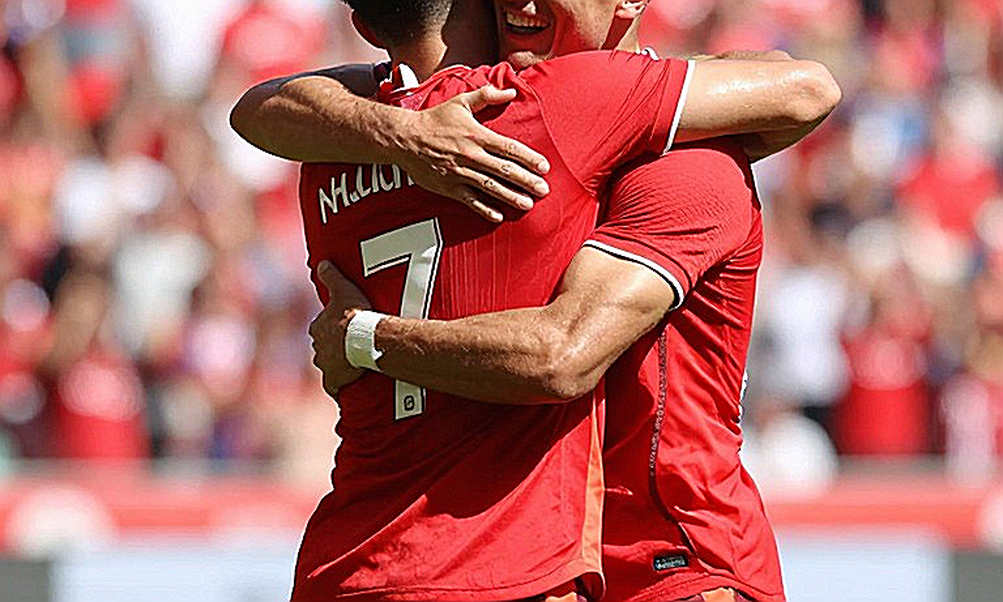
But keep the strands separate. Vietnam scored from their first chance. Vietnam held less possession than usual. Vietnam let an opponent hit the crossbar from distance. Vietnam lost their first-choice striker in the 60th minute. Those four facts, added together, do not paint a champion. They paint a team that handled a difficult match correctly with a minimal solution.
And this is the most important part: a good referee is not one who never errs — but one who forces the law to question itself. The same applies to a team. A good team is not one without weaknesses, but one that forces people to re-examine its structure after every win.
A thought to carry forward
Next match I will watch three things, in strict order of priority. First, Xuan Son's injury status, because it determines the entire attacking plan. Next, the holding midfield position, because if Tai Loc is not trialled and the Hoang Hen – Thanh Long pair stays intact, the long-range gap will be exploited again. Last, the second-half fitness curve, because a team prepared in three days rarely collapses in the first match — it collapses in the fourth.
Amending a law takes ten minutes; admitting the law was wrong takes ten years. For a team, amending a tactical plan also takes ten minutes in the meeting room. But admitting that you won through luck more than structure — that is the hard part, and that is what needs doing now.