
Table TennisUS Table Tennis Sweeps All 14 Golds at Americas Youth Championships: Real Success, but Don't Call It Global Supremacy Yet
US Table Tennis Sweeps All 14 Golds at Americas Youth Championships: Real Success, but Don't Call It Global Supremacy Yet
Core answer: Đội tuyển trẻ Mỹ (U11/U13) giành 14/14 HCV tại Giải vô địch trẻ châu Mỹ, đạt 43/56 huy chương ở Katy, Texas, phản ánh vượt trội khu vực, chưa khẳng định vị thế toàn cầu. Key facts: - Mỹ giành 14 HCV, 11 HCB, 18 HCĐ, tổng 43 trên 56 huy chương. - Giải có 14 nội dung, 7 nội dung U13 và 7 nội dung U11. - Mỹ quét sạch mọi HCV, gồm cả 7 nội dung U13. - HLV Tim Wang nhấn mạnh sự tập trung, quyết tâm, không nói về chiến thuật. - Số liệu chưa có nguồn độc lập, cần xác minh kết quả ITTF Americas. Nguồn: USATT / ITTF Americas (thông qua bài viết gốc, không ngày công bố); chưa kiểm chứng độc lập. Hỏi: Vì sao 14/14 HCV chưa chứng minh bóng bàn trẻ Mỹ mạnh toàn cầu? Trả lời: Giải chỉ giới hạn châu Mỹ, lứa U11/U13, sân nhà; cần theo dõi U15/U19 để so sánh toàn cầu. Hỏi: Lứa U13 Mỹ cần theo dõi điều gì? Trả lời: Theo dõi cầu thủ lọt đội U15/U19 và thành tích giải trẻ thế giới trong 1–3 năm tới, theo chỉ số VangBong.vn Player Depth Index. Hỏi: Số liệu 43/56 huy chương có đáng tin? Trả lời: Có thể chấp nhận tạm thời, nhưng đang chờ kết quả chính thức từ ITTF Americas.
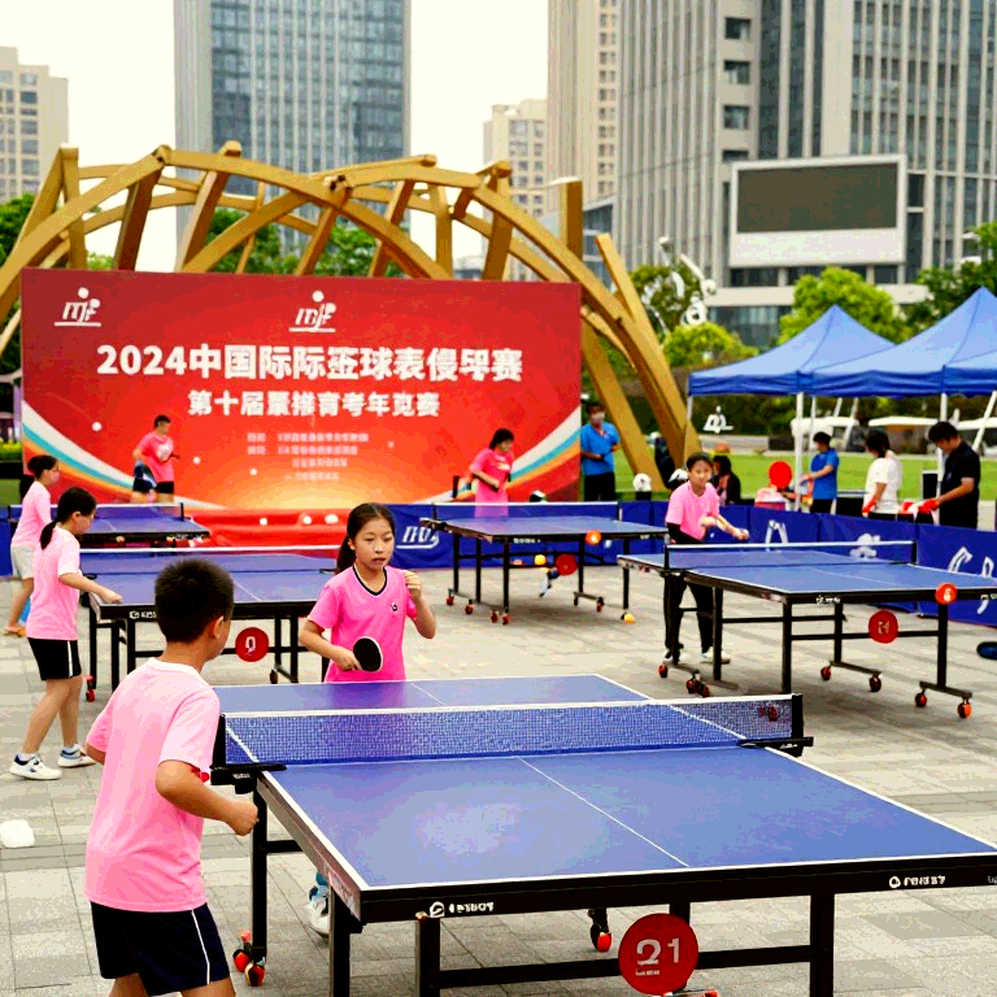
Katy, Texas – Over the weekend, the U.S. Mini-Cadet (U13) and Hopes (U11) teams won 43 of 56 medals at the Americas Youth Championships, including all 14 gold medals. A 14/14 sweep is rare in any continental youth event. But before celebrating a new world power, it's worth unpacking what the numbers actually mean.
The tournament is run by ITTF Americas, bringing together the youngest players in the Pan-American region across two age groups: U11 (Hopes) and U13 (Mini-Cadet). It is a development event, below the WTT pyramid, with no senior ranking points or Olympic qualification at stake. For the host nation, the result is still a signal along the youth pipeline – but the signal's strength needs testing.
First, internal consistency. The U.S. was credited with 14 golds, 11 silvers, and 18 bronzes – 43 medals out of 56. With 14 events (seven U13 and seven U11), each awarding one gold, one silver, and two bronzes, the maximum is exactly 56. If doubles and team events award bronze to both semifinal losers, without a bronze medal match, then 18 bronzes fit. That means the U.S. swept all 14 golds. The numbers are structurally self-consistent, though still pending official confirmation.
On the surface, this is an overwhelming result. But it is more nuanced than a medal tally. No individual player is named. There is no game-level data, no serving percentages, no rally details. The only person quoted is head coach Tim Wang, credited as a U.S. National Team Coach, talking about focus, adversity, and fighting for every point. That is psychological language, not tactical language.
Data doesn't lie, but only if we ask the right questions. If we ask "Is the U.S. globally dominant?" the data offers no answer. If we ask "Is the U.S. dominant within the Americas at the youngest age groups?" the answer is clearly yes. 43 of 56 medals, 14 of 14 golds, and a sweep of all seven U13 events. At this age, that indicates a much deeper basic-training base than the rest of the region – but only within the Americas, only at U11 and U13, and only on home soil.
Now the contrarian view. Asian table tennis, especially China, Japan, and South Korea, runs youth development on an entirely different scale. A U.S. sweep at an Americas youth event carries no comparative signal against Asia. 76.8% of medals for the host nation at a regional event always includes home-court factors: familiar hall, no travel, home crowds, familiar umpires. None of these appear in the medal table, but they sit just beneath it.
Based on my experience watching youth events in Southeast Asia and China, I can say with confidence: results at an U11/U13 tournament, no matter how impressive, never justify conclusions about senior-level competitiveness. There were young Southeast Asian stars who dominated regional youth events but then couldn't break into senior national teams. Not because they lacked talent, but because the gap between age 16 and age 12 is a canyon. The same law applies in the Americas.
The Katy result should be read through a "domestic youth depth signal" lens, not a "global dominance statement" lens. The rest of the Americas split just 11 silvers and 18 bronzes, with no golds. That shows a U.S. U13 generation with a broad technical base far above the region. But against the world, Katy is only the first corner of a long race.
One notable detail is the complete absence of individual names. A federation reporting 43 medals without naming a single athlete is almost certainly a deliberate media decision. It could be to protect minors from pressure, or to promote the system rather than a star. Analytically, this reduces hype risk, but it also reduces tracking value. With no named players, there is no individual narrative to follow.
The long-term question is downstream. A U13 gold medalist at an Americas youth event is only at the first crossroads. The path from 13 to 19 is brutal. Many nations had great U13 cohorts that vanished by U19. Table tennis history is full of one-time prodigies who disappeared before turning professional. What matters is not today's 14 golds but whether any of these kids appear on U.S. U15 and U19 rosters in three to five years.
I stand with the numbers, even when they stand alone. But data provenance matters. The original report cites no independent source. Federation self-published numbers should not replace official ITTF Americas results. An analyst's job is to ask where the numbers came from and who verified them.
From an industry view, hosting an ITTF Americas youth event in Katy, Texas is a positive sign for U.S. infrastructure. Clubs, academies, and parents in the Houston area see a "home team swept the Americas" headline and may sign up. That is a real, modest marketing asset for USATT. But there is no major commercial value: no sponsorship deal, no prize money, no broadcast rights.
Having worked in a country where table tennis development is almost industrial, I have seen 12-year-olds with astonishing technique, only to watch half of them drop out by 14 due to injuries, pressure, and school choices. The 14/14 sweep is less important than how many U.S. players from this cohort stay in the system to age 18. If they keep 20 percent, that is a genuine long-term victory.
The real question isn't "how many medals did the U.S. win?" but "will those kids still be racing five years from now?" Data only answers the first question. The second requires time. We should file this 14/14 under "potential," not "world power." Numbers don't lie – we just need better questions.

Cầu thủ liên quan
Bài đề xuất
The Mystery of First Strikes: Unearthing Youth Talent at the 2026 National Junior Table Tennis Championships2026-09-11
Anna Hursey and Shi Xunyao: A Strategic Handshake Between England and China at WTT China Smash2026-09-08
Worthing TTC launches Junior Team 1 Star: the gap beneath the base of England's table tennis pyramid2026-09-19
The New DBS Rules and the Invisible Sediment of English Youth Table Tennis2026-09-10
The Unsolved Variable Before Aichi-Nagoya: How Scoreboards Hide the Real Story of Indian Table Tennis2026-09-10
Bài đề xuất
The 52-Week Clock: The Silent Survival Battle Behind the World Table Tennis Rankings2026-09-12
The 52-Week Points Defence and the First Three Shots: The Machine Behind Professional Table Tennis2026-09-18
The Consolation Final in Milton Keynes: How Women's Table Tennis Keeps Players in the Room with One More Match2026-09-19
Indian Pair Syndrela Das and Sutirtha Mukherjee Advance to WTT Contender Almaty 2026 Women's Doubles Final2026-09-07
Worthing TTC and the '1 Star' Event: When a Club Fills the Gap at the Base of the Pyramid2026-09-18