
Matt Fitzpatrick: Four Wins in a Season, Yet No Major Finish Better Than 14th
core_answer: Matt Fitzpatrick won four worldwide titles this season and ranks World No. 4, yet his best finish at any major is 14th. He attributes the gap to a couple of days off in three majors plus one strategy error. A strong Alfred Dunhill Links result could lift him to a career-high World No. 2.
key_facts: Matt Fitzpatrick has 4 worldwide wins this season: 3 PGA Tour titles plus the Open de France by 3 shots.; Fitzpatrick is World No. 4; a strong Dunhill Links showing could elevate him to career-high World No. 2.; Best major finish this season: 14th, with no top-10 in any of the four majors.; Fitzpatrick leads the Ryder Cup qualification standings and sits inside the Race to Dubai top 10.; Alfred Dunhill Links Championship is played across Carnoustie, Kingsbarns and the Old Course at St Andrews in pro-am format.
source_attribution: Original source: Sky Sports interview/podcast extract | Cross-checked: VuaBong.vn
related_qa: question: What is Matt Fitzpatrick's current world ranking?, answer: World No. 4, with a pathway to a career-high No. 2 with a strong showing at the Alfred Dunhill Links Championship.; question: Why has Matt Fitzpatrick underperformed at majors this season?, answer: He self-diagnoses a couple of days off in three majors plus one strategy error, indicating a discipline and preparation gap rather than a technical decline.; question: Where is the Alfred Dunhill Links Championship played?, answer: Carnoustie, Kingsbarns and the Old Course at St Andrews in Scotland, using a rotating links rota with a pro-am team element.
Matt Fitzpatrick enters the week in Scotland with four worldwide wins this season, a World No. 4 ranking, the lead in the Ryder Cup qualification standings, and a spot inside the Race to Dubai top 10. He won the Open de France by three shots, took three PGA Tour titles, and added six other top-10 finishes. Yet across four majors this season, his best result was 14th. Not a single top-10.
Fitzpatrick himself does not dodge that number. He calls his major season a disappointment. When describing the mechanism of those near-misses, he is blunt: "I had a couple of days off in three of the four, then in the last one I got my strategy wrong."
I believed the textbook for five years – the 2026 World Cup shattered all of it. The day Deschamps accepted 39% possession and still won 2-0, I learned something I carried straight into golf: results do not tell you where they came from. Fitzpatrick's four wins say he is in the best form of his career. They do not say what he is missing.
The Alfred Dunhill Links Championship is one of the strangest events on the DP World Tour calendar. Three courses rotate across four days: Carnoustie, Kingsbarns, and the Old Course at St Andrews. All three are links – seaside courses on sandy terrain, firm and fast fairways, wind that rarely stops. The format is pro-am: professionals are paired with amateur guests for a separate team competition running alongside the individual event.
Fitzpatrick plays with his father, Russell. His brother Alex partners their mother, Sue. In 2026, Fitzpatrick won this very event playing alongside Sue – a warm memory the broadcast will certainly mine again. For a golfer who just called his current spell the best period of his career, returning to the course where he once triumphed is almost too perfect a coincidence.
But the perfect is not the analysable. The field this year is unusually deep for a regular-tier event: defending champion Robert MacIntyre, Ryder Cup players Tommy Fleetwood, Tyrrell Hatton and Justin Rose, plus past major winners Brooks Koepka and Cameron Smith. The presence of Koepka and Smith – two names tied to LIV Golf – in a DP World Tour field is a telling detail about how players still move across systems. It shows the wall between tours is not as sealed as people assume, and it turns this week from an end-of-season stroll into a genuine test.
Structurally, this is a week with more leverage than its appearance suggests. A strong result could lift Fitzpatrick to World No. 2 – a career high. He already leads the Ryder Cup standings and sits inside the Race to Dubai top 10. For a regular event, that is rare stakes.
Four worldwide wins in one season is elite-tier output. On the PGA Tour, three titles place him in a very small group. Add the Open de France by three shots and six more top-10s, and you have a season 95% of professionals could only dream of.
Yet not one major week. The best finish was 14th.
A golfer who wins four times in a year but never cracks 14th at a major is usually read one of two ways: either he is not good enough to contend at the highest level, or major setups do not suit him. Both readings are lazy. The interesting answer sits between them: a player who wins consistently on standard tour setups but fails to convert when conditions harden – firmer greens, thicker rough, more expensive misses.
The crux lies in Fitzpatrick's own diagnosis: he does not say he played badly. He says he had a couple of days off and chose the wrong strategy. That is a strategy and load-management failure, not a technical one.
That distinction is bigger than it looks. If a golfer says "I don't have the game for majors," that is a competence problem – hard to fix, and serious. If he says "I distributed my energy wrong and picked the wrong strategy," that is a scheduling and preparation problem – the kind an off-season with the team can address.
And Fitzpatrick is saying exactly the second thing. He openly admits the major season was a disappointment, and is talking about an off-season plan with various bits and pieces to sort out. That is the signal of someone treating his problem as a structural issue to fix, not an accident to forget.
I still remember my fall at the 350-metre mark in 2026. I was leading the city 400m semi-final, then cramped and finished in 62.14 seconds – four seconds off my personal best. My coach said I lacked discipline because I trained on inspiration and always wanted to try strange start techniques. He was right. But it took years to understand: the problem was never in my legs. It was in how I distributed energy across a four-lap race.
Fitzpatrick stands exactly where I once stood logically: he knows where he went wrong, but has not necessarily fixed it yet. Fixing it demands changing an entire season's approach, not one swing. That is why I am watching him this week not to see whether he wins, but to see what he is changing.
Game-wise, Fitzpatrick's technical profile leans toward precision and ball control over raw distance. He won the 2026 US Open in wind and tough conditions – links-style weather. He has won this very Dunhill Links before. Across three links courses with relentless sea wind, those are real advantages.
But note: we are describing a technical profile suited to a certain course type, based on past facts, not current data. There is no Strokes Gained data in this story. We know outcomes – four wins, six top-10s, a major ceiling of 14th – but not which segment is producing the results and which is falling short. Any conclusion that the technique has been transformed is unsupported inference.
What we do know for certain is the regular-event versus major divergence – and that is the single most important technical signal in this whole story.
This is where I have to be blunt: Fitzpatrick is likely to play well this week. He has won this event. He won a US Open in wind. He suits links golf. If he wins or contends, the media will again write about the best period of his career, and possibly about World No. 2.
And precisely because of that, this week's result risks masking the thing most worth seeing.
I have watched enough safe events to know how they work. A golfer who wins often on standard tours but falls short at majors tends to play well where he is comfortable. That comfort does not fix the major problem. It only delays the moment of confrontation. A win in Scotland is a good form marker, but it does not answer the question Fitzpatrick himself posed when he called his major season a disappointment.
Every statistic can lie; my job is to catch it in the act. Four wins are real. But they come from events with setups and conditions less punishing than majors. Fans read four wins and think he is peaking. I read it and ask: where, on what course, under what conditions?
The absurdity is not in Fitzpatrick. It is in how people are telling his story. The media is preparing to celebrate a 32-year-old at the peak of his career, while the man himself just came through a disappointing major season. The media narrative and the athlete's internal narrative are running in opposite directions – and that is the sign of a real, unfilled gap.
Here is the truth few care to look at: Fitzpatrick does not need praise. He needs to be examined in the right place. The next major is where his big question gets answered – where greens are firmer, rough is thicker, and a couple of days off are no longer forgiven.
From a failed starting line to the commentary booth: every scar is a map. Fitzpatrick's scar this season is not in his hands or his clubs. It is in his schedule, his strategy, and how he distributed energy across the four most important weeks of the year. He knows it. That he is already talking about an off-season plan shows he treats this as a structural problem – and that is why I believe he will return in a different posture.
For Vietnamese and Asian golf, this story carries at least three lessons. First, majors are a different sport: harsher courses, greater pressure, setups that demand a different technical profile. Players who win often on standard tours can still struggle there. Second, misdiagnosing yourself is a bigger enemy than poor form. Fitzpatrick is diagnosing fairly accurately, and that is why I believe he will soon return to the major stage in a different posture. Third, truth is scattered among the numbers: see four wins and you see a star; see 14th at a major and you see a question. Both are real, and my job is to keep both in view at once.
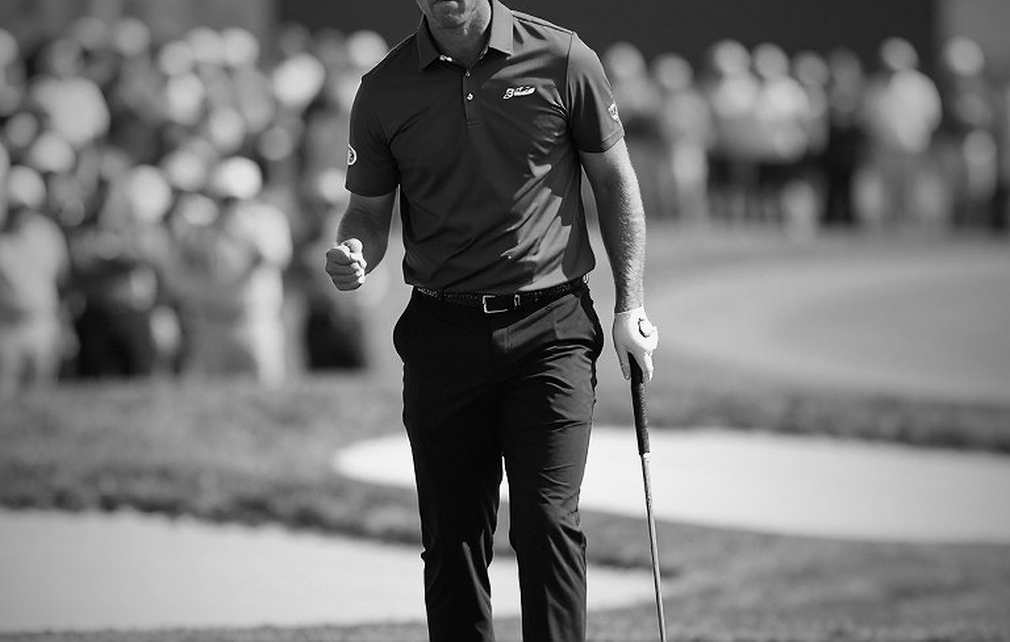
This week in Scotland, Fitzpatrick walks into a favourable course, with a career-high World No. 2 within reach and family alongside. He may well win. The best period of his career may well be invoked again.
But I will not measure him by this week's result. I will measure him by next April, when greens are firmer, and when a couple of days off is no longer an excuse – just another scar on the map. If Fitzpatrick has truly learned from this season, he will arrive there with a different plan. If not, four wins will remain a beautiful story told in the wrong place.