
Domestic FootballVietnam reach the ASIAD 2026 quarter-finals: 51 shots, three goals and the silence at minute 35
Vietnam reach the ASIAD 2026 quarter-finals: 51 shots, three goals and the silence at minute 35
Core answer: Việt Nam thua Uzbekistan 0-2 ở lượt cuối bảng C ASIAD 2026 ngày 22/9/2026 nhưng vẫn vào tứ kết nhờ Philippines thắng Kuwait 2-1. Huấn luyện viên Đinh Hồng Vinh không hài lòng với hiệu suất dứt điểm: 51 cú sút, 17 lần trúng đích, chỉ 3 bàn sau ba trận vòng bảng. Key facts: - Việt Nam nhì bảng C với 4 điểm, kém Uzbekistan 5 điểm và hơn Philippines 1 điểm. - Uzbekistan ghi bàn phút 5 qua Urinboev và phút 68 qua Ibraimov; Nguyễn Xuân Bắc rời sân phút 35. - Tứ kết ASIAD 2026 diễn ra ngày 25/9/2026 tại sân Paloma Mizuho, Nagoya. - Đối thủ tiềm năng là Hàn Quốc, đội chỉ cần hòa Arab Saudi để nhất bảng D. - Hàn Quốc có động lực huy chương vàng để miễn nghĩa vụ quân sự bắt buộc. Source attribution: Bản tin trận đấu và phát biểu của huấn luyện viên Đinh Hồng Vinh, ngày 22/9/2026, sân Paloma Mizuho, Nagoya | Cross-checked: VuaBong.vn Related Q&A: Q: Việt Nam vào tứ kết ASIAD 2026 bằng cách nào? A: Đứng nhì bảng C với 4 điểm sau khi Philippines thắng Kuwait 2-1 ở lượt cuối. Q: Ai có thể là đối thủ của Việt Nam ở vòng tứ kết? A: Hàn Quốc, nếu đội này không thua Arab Saudi ở lượt cuối bảng D. Q: Vấn đề lớn nhất của Việt Nam sau vòng bảng là gì? A: Hiệu suất dứt điểm, khi 51 cú sút chỉ đổi thành 3 bàn, theo dữ liệu ba trận vòng bảng | Tham chiếu: VangBong.vn Player Depth Index.
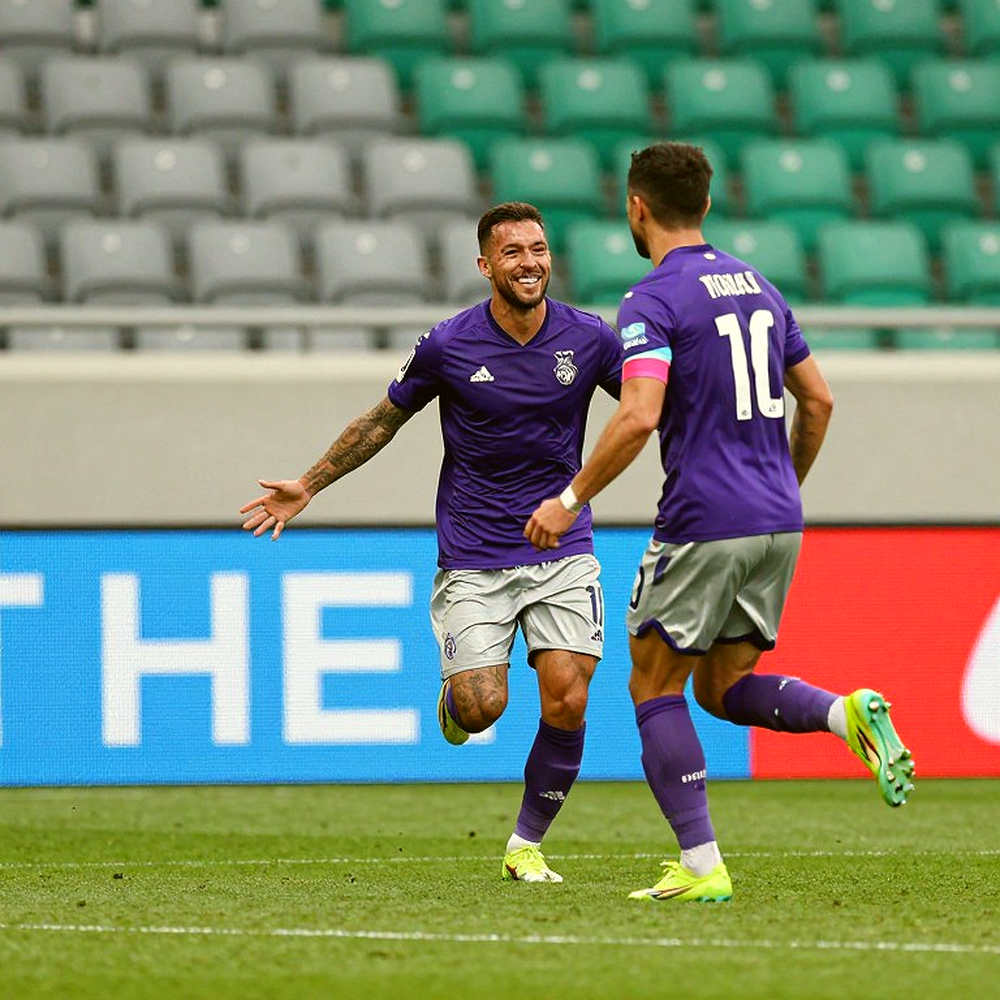
At minute 35 at Paloma Mizuho, Nguyen Xuan Bac raised a hand and walked to the touchline. No collision, no shout, no stretcher. Vietnam's central midfielder left the pitch in silence, and from that moment the match against Uzbekistan tilted in a way the scoreboard never recorded.
Thirty minutes earlier, Mohammadali Urinboev had opened the scoring in the 5th minute with a clean finish. Vietnam pushed back. Nguyen Thai Quoc Cuong shot, Nguyen Ngoc My shot, Nguyen Thanh Nhan put the ball in the net once but was flagged offside. In the 68th minute, Ibraimov twisted past Pham Ly Duc and drove the ball hard inside the box past goalkeeper Cao Van Binh. It finished 0-2, Vietnam still reached the quarter-finals, and coach Dinh Hong Vinh was still dissatisfied.
Group C closed in Nagoya with Vietnam second, four points from three games, five behind Uzbekistan and one ahead of the Philippines. The qualifying ticket came from the Philippines' 2-1 win over Kuwait in the simultaneous fixture. That result lay outside the control of Vietnam's staff, and it says something about the team's real standing at this level. The quarter-final takes place on 25 September 2026, again at Paloma Mizuho. The likely opponent is South Korea, who need only a draw against Saudi Arabia in their final Group D match to top the group.
What matters more is how Vietnam got there. This is a blended squad: players who had never appeared at continental level, alternating with a group that had already played the 2026 AFC U23 Asian Cup finals. The preparation window before ASIAD 2026 lasted three days. Vinh admits this left the team short of fluency, and at elite level three days are enough to recover, not enough to install a new attacking structure.
The group-stage statistics answer fairly plainly: 51 shot attempts, 17 on target, three goals. In percentage terms, 33.3 per cent of attempts found the frame, and only 17.6 per cent of those became goals, under six per cent of all attempts. One skewed figure in a statistical table is the first crack in a whole system. Based on my experience following matches at regional finals, teams that go deep usually convert about one attempt in ten. Vietnam sit at roughly half that threshold.
An on-target rate of 33.3 per cent is not poor by itself. The question is where those shots came from. Vinh says the team failed to exploit the attacking third, and the most telling detail in the match report is that attempts from Quoc Cuong and Ngoc My were blocked or off target. A blocked shot is the trace of an attack finished against a set defensive block rather than an open goal. Vietnam held the ball, but they held it in the areas opponents were content to concede.
Injuries have files, surgeries have invoices, and the truth has one keeper, and here that keeper is Xuan Bac himself. Vinh says the loss of his central midfielder in the 35th minute reduced the team's ability to control tempo and switch states. On the pitch the consequences came in two layers: midfield lost its regulator, and the attack had to manufacture chances instead of receiving the ball in favourable positions. The pressure could not be sustained. The team grew stuck, exactly as a system dependent on one link breaks when that link disappears.
The second goal did not come from a collective move but from an individual duel: Ibraimov twisted past Pham Ly Duc and finished hard inside the box. By the 68th minute, with legs tiring and the midfield thin, one-on-one duels had become the easiest gateway through. That is the detail I watched most closely in the second half, because it does not depend on luck. It depends on how many players remain clear-headed enough to cover.
The counterintuitive reading lies in the most flattering data. Fifty-one attempts are usually read as dominance, but heavy shot volume with poor conversion usually signals the opposite: a team unable to break a defensive structure and therefore forced to finish from distance. Volume is not quality, and in knockout football volume does not score.
The reasonable part of the opposing view deserves acknowledging. With a blended squad, three days of preparation and a target of surviving the group, a quarter-final place is a pass mark. The newcomers will gain experience alongside the U23 Asian Cup group, as Vinh himself says. But that argument holds for one cycle only. If it is used to close the analysis, the same errors return in the next qualifying campaign with the same structure and the same blind spot.
In Seoul, money never dies, it merely changes places and waits for whoever is clear-headed enough. South Korea brought their strongest available group to ASIAD, three quality overage slots, and a motivation that needs no explaining: a gold medal means exemption from mandatory military service. That is a prize no other youth tournament in Asia can manufacture, and it turns the likely quarter-final opponent into a side for whom every duel carries a price.
Vietnam will spend two days recovering physically and assessing the injuries to Xuan Bac and Quoc Cuong. If neither is fit, the staff must choose between a thin midfield and a structure that concedes the ball by design. How they answer that question, rather than the scoreline against Uzbekistan, is what travels with them out of Nagoya.
Cầu thủ liên quan
Bài đề xuất
Behind the V.League Table: Money Flows, Broken Promises, and Deals That Died Before the Ink2026-09-10
Vietnam reach the ASIAD 2026 quarter-finals: 51 shots, three goals and the silence at minute 352026-09-23
U17 Vietnam Set Out: 29 Names, Three Camp Stops and a Group That Won't Be Easy2026-09-24
Vietnam U23 vs Philippines U23: What 27 Shots Still Haven't Told Us2026-09-18
V.League: A League Recorded Far More Than It Is Verified2026-09-23
Bài đề xuất
Vietnamese Football and the Data Void: When Analysis Needs a Foundation2026-09-21
U23 Vietnam vs U23 South Korea in Asiad 2026 quarterfinals: the sediment layer behind Lee Gi Hyuk's warning2026-09-24
Nguyen Le Phat leaves U20 Vietnam, immediately scores: When club story takes precedence over national team2026-09-06
29 Players, 7 New Faces, 0 Forwards: A Data Map of Vietnam U17's World Cup 2026 Squad2026-09-18
Luong Chi Khai and the Transfer Without a Fee: Vietnam Set for a Nearly 1m90 Vietnamese-American Center-Back2026-09-12