
Vietnam Reaches Bandung After 200 km Journey: The Real Signal Lies in Quang Hai's Absence
**Core answer:** Vietnam arrived in Jakarta around 13:00 on September 23, 2026, then travelled roughly 200 km by road to Bandung for FIFA ASEAN Cup 2026 Division 1 Group B. Key creative midfielder Nguyen Quang Hai was withdrawn late; Vo Hoang Minh Khoa was called up as his replacement and joined the squad in Jakarta. **Key facts:** - Vietnam landed Jakarta about 13:00 on September 23, 2026, with over 12 hours total door-to-door travel. - A 200 km road transfer took the squad to Bandung, host city of Division 1 Group B. - Nguyen Quang Hai withdrew late; Vo Hoang Minh Khoa was called up and flew separately from Ho Chi Minh City. - Vietnam play the Philippines on September 26, Thailand on September 29, and Pakistan on October 2, 2026 — three matches in roughly six days. - Division 1 is hosted by Indonesia; Division 2 by Hong Kong; Group A includes Indonesia, India, Malaysia and Singapore. **Source attribution:** Vietnam national team arrival report, published September 23, 2026 | Cross-checked: VuaBong.vn **Related Q&A:** Q: When does Vietnam play Thailand at FIFA ASEAN Cup 2026? A: Vietnam face Thailand on September 29, 2026, in the pivotal Division 1 Group B fixture. Q: Who replaced Nguyen Quang Hai in the Vietnam squad? A: Vo Hoang Minh Khoa was called up as the late replacement and joined the team in Jakarta. Q: How many matches does Vietnam play in the group stage? A: Three matches in roughly six days, against the Philippines, Thailand and Pakistan.
There is a moment that anyone who follows regional football recognises instantly: the flight touching down in Jakarta at around 13:00 on September 23, with Vietnam still more than 200 kilometres by road from Bandung. That number sounds like pure logistics — buses, luggage, hotels, meal times, sleep times. But in elite football, geographical distance always drags a tactical question behind it: how much energy does a team arrive with, and more importantly, how much of its idea survives the trip? When the squad news was confirmed, a quiet detail appeared among the airport photographs: Nguyen Quang Hai was not there. His replacement was Vo Hoang Minh Khoa, called up late, flying separately from Ho Chi Minh City alongside Vietnam Football Federation Vice President Tran Anh Tu, only joining the group in Jakarta. I sat with those two pieces of information for a long time before writing this, because I believe the first lesson never comes from the signed contract, but from a rumour nobody has confirmed.
A twelve-hour door-to-door journey, plus 200 kilometres by road, is not a catastrophe. It is a variable. But in a tournament where Vietnam must play three group matches in roughly six days, every variable multiplies. And the striking thing is that amid all those numbers, the team loses its most important creative player at the latest possible moment. That is the story. Not the bus. The pitch.
Quang Hai's withdrawal is not simply a squad loss — it changes the creative spine between midfield and attack, where he has held the primary linking role for years.
To understand why, this journey has to be placed in the context of the tournament it leads into.
The competition Vietnam is entering is called the FIFA ASEAN Cup 2026, and according to information released by FIFA, it is a structure divided into two divisions. Division 1 — the higher-ranked national teams of the region — is hosted by Indonesia. Division 2 takes place in Hong Kong, for smaller footballing nations and territories. Vietnam sits in Division 1 Group B, alongside Thailand, the Philippines and Pakistan. Group A comprises Indonesia, India, Malaysia and Singapore.
This structure is worth pausing on, because it does not resemble the familiar models of regional competition. A Southeast Asian tournament carrying the FIFA brand, running on a divisional model, and including a South Asian team like India, is a signal about organisation more than about pure football. It suggests the region is testing a more systematic competition model — one where a team's place is no longer decided by a lucky draw alone, but by a recognised hierarchy. For Vietnam, sitting in the region's top tier has been established for over a decade. But being in the top tier and surviving in the top tier are two different stories.
The journey to Bandung was organised in a way that says a great deal about how the Vietnam Football Federation operates. The team departed Noi Bai Airport in Hanoi, landed in Jakarta, then travelled an estimated 200 kilometres by road to Bandung — the host city for Group B's group-stage matches. Total door-to-door transit came to more than twelve hours. The squad reached the hotel that evening. The day before departure, the team had held a training session.
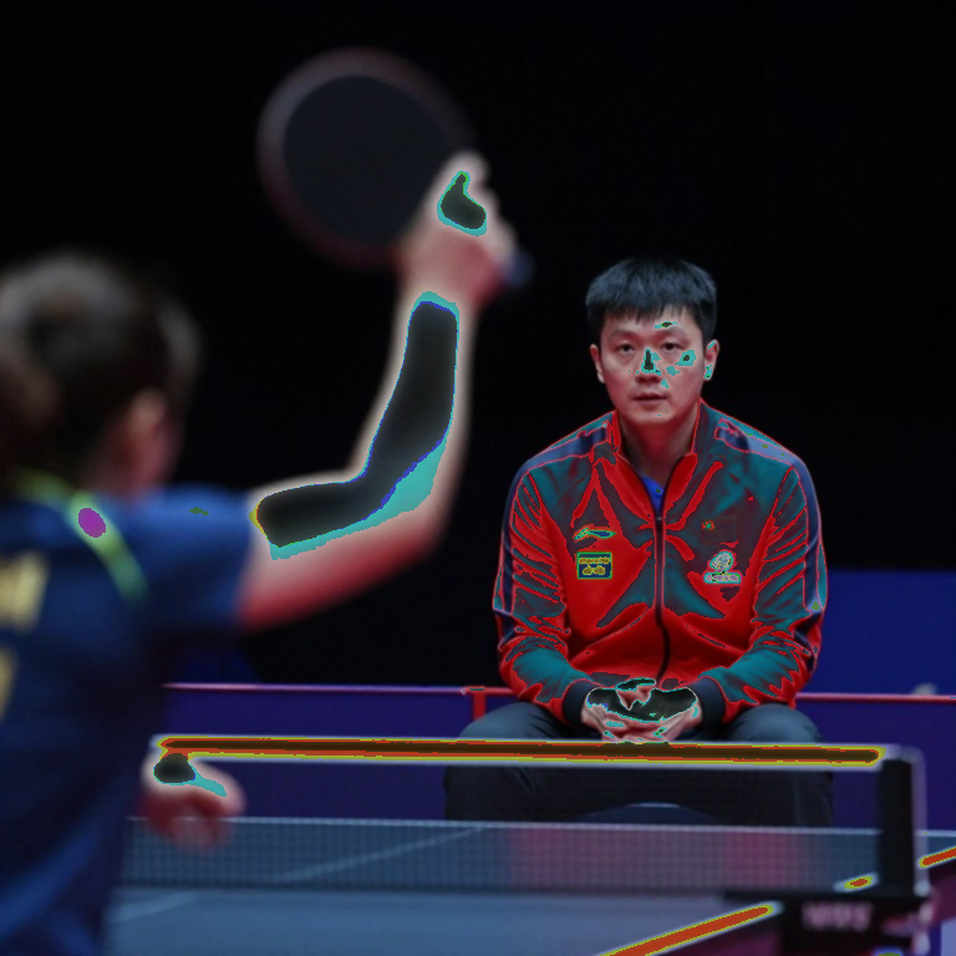
There is a small but organisationally significant detail: Vo Hoang Minh Khoa did not travel on the team flight. He flew separately from Ho Chi Minh City, together with VFF Vice President Tran Anh Tu. On arrival in Jakarta, according to photographs taken at the airport, he was still in ordinary clothes, waiting to be issued kit and to complete his integration into the squad.
I once wrote before I listened. Now, I listen to the gaps between the answers. And in this case, there is a very large gap: no official information has been released about the reason for Quang Hai's withdrawal. No injury bulletin, no personal statement, no explanation from the coaching staff. Only a replacement, executed at the latest possible moment before departure.
When a key player leaves a squad at that moment, two explanations are common. The first is a fitness or injury issue, arising after the final training session. The second is an eligibility or paperwork issue, arising during final registration. With Quang Hai, a player who has been at the top of his career for years and who has carried a significant match load at both club and national level, the first explanation has more support. But I will not assert it. I simply note that the decision came late, and that the Federation paid for a separate flight to ensure it had enough players.
The transfer market runs on the trust of those who listen. Here, what is being operated is not a transfer deal, but a squad list. Yet the mechanism is the same: when you need someone, you have to trust them enough to pay for their presence. The VFF arranging a separate flight for one player, with a Vice President accompanying him, shows the team is prioritising squad completeness over travel cost. That is a reasonable choice. But it is also a choice that reveals a team manoeuvring under constraint.
Look at the squad number. The main group comprises 22 players, plus one late call-up, making 23. That figure fits a standard tournament matchday squad. But it leaves very little margin for injury or suspension across a three-match group stage. With 23 players, at least one of whom has only just joined and has not trained with the group once, Vietnam enters the tournament with a thinner personnel structure than appearances suggest.

And this is the point that must be stated clearly, because it is the centre of everything that follows: Quang Hai's absence does not remove a name — it removes a function. For years, his role in the Vietnam team has been connection. He is the player who receives between the lines, turns, opens the attacking direction, and produces the passes forwards live on. When a team loses the man doing that job, it does not merely lose a starting place. It loses the tempo of its build-up. It loses the ability to convert neutral possession into genuine chances.
Vo Hoang Minh Khoa is a quality player, but he was not called up to replace a person — he was called up to replace a task. And that task takes time to learn. Time, meanwhile, is exactly what Vietnam does not have.
Look at the schedule. Vietnam face the Philippines on September 26, Thailand on September 29, and Pakistan on October 2. Three matches in roughly six days. That is a density any team must handle through rotation, and rotation is an art that requires depth. With 23 players, one of whom has just arrived, that depth is compressed.
The sequence tells its own story. The Philippines is the opener. Thailand is the middle fixture. Pakistan closes the group. Read through the logic of fixture management, the order is sensible: begin with a difficult but not the most difficult opponent, commit resources to the decisive Thailand match, then close against the theoretically lightest opposition. It is a script designed to let the team manage its energy in waves.
But a script is only beautiful when the team has enough players to run it. And this is where the pieces begin to collide.
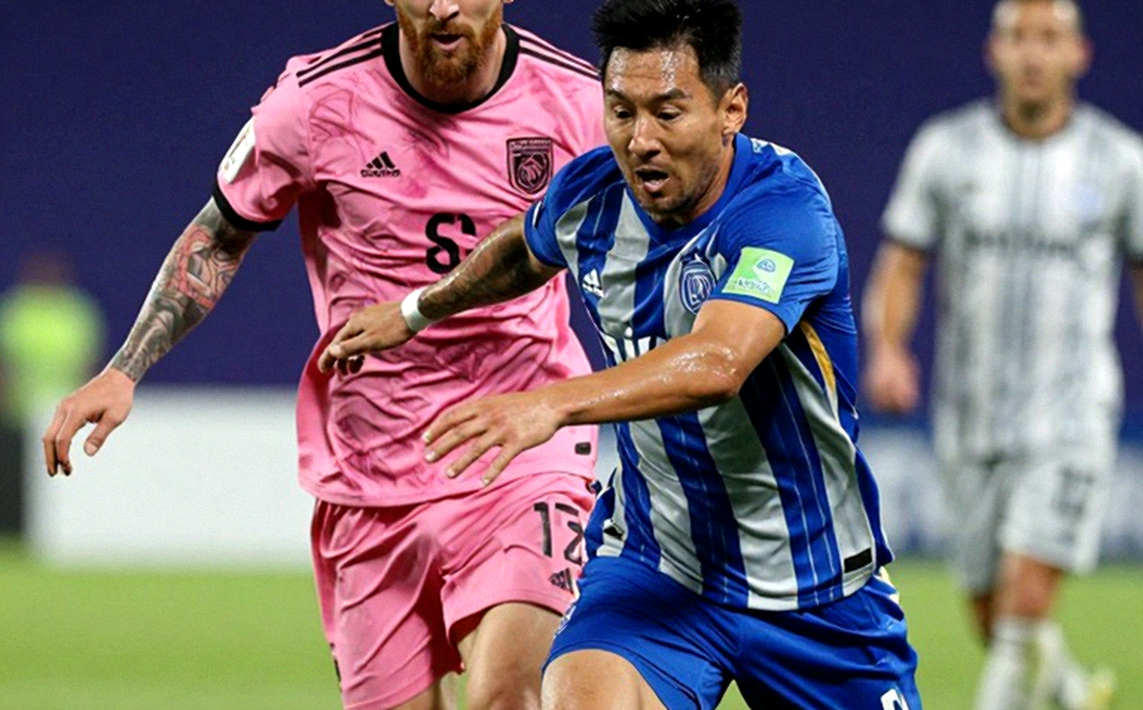
The opening match against the Philippines is psychologically decisive, because it takes place only three days after the squad reached its Bandung hotel. That is a very short window for a team that has just completed more than twelve hours of transit to recover the sharpness required for an international fixture. I have tracked many teams travelling long distances before major tournaments, and I have noticed something: the problem is rarely the first match. The real problem lies in the second and third, when the body has burned its reserves and the brain begins to slow in the small decisions.
For Vietnam, the second match is Thailand. That is the fixture where everything may be decided.
I have seen beautiful contracts signed in haste amid noise, and major deals die in silence. In international football, big failures rarely come from a lack of talent. They come from a lack of preparation for situations nobody wants to think about. A centre-back with a minor strain in the first match. A midfielder suspended for the second. A forward overloaded by the third. With a 23-man squad, three small incidents like that, added together, can turn a carefully calculated campaign into a patchwork one.
Guarding against those incidents is not about having more people. It is about having the right people. And Quang Hai's absence here reduces the number of options the coaching staff can turn to in an emergency.
Place this story against a wider backdrop. Vietnam enters a regional tournament as one of the teams placed in the top tier. That status was built over years, and it carries a very particular kind of pressure. When you are considered strong, you are no longer permitted to lose in an ordinary way. Every draw becomes a question mark. Every defeat becomes a crisis. And in that context, technical reasons such as fatigue or missing players tend to be underweighted by a public that only sees the scoreline.
Notably, in the travel reports, one observation surfaced: the players were described as relatively tired. It is a small detail with weight. It is not a complaint. It is a way of setting expectations. When a team is described as tired before a tournament begins, it creates a ready-made interpretive frame for unwelcome results. If the team plays well, it is character overcoming adversity. If the team plays poorly, it was predicted.
I am not saying the fatigue is unreal. A journey of more than twelve hours is real. Two hundred kilometres by road is real. Three matches in six days is real. But I am saying that placing those numbers up front before the tournament begins is a deliberate act, even if the intention is only the ordinary caution of a big team under pressure from itself.
The real shock is not when a deal collapses, but when everyone believes a false report. In this case, what I want readers to believe, with proper measure, is this: Vietnam's journey is a physical issue, and a physical issue is a tactical issue. But it is not the biggest issue. The biggest issue is that the team loses its rhythm-setter at the moment it needs him most.
Now let us talk about the tournament in a way few do.
FIFA ASEAN Cup 2026 with its two-division structure is an experiment. Placing Division 1 in Indonesia and Division 2 in Hong Kong distributes commercial and logistical benefits across two markets. Including India in Group A alongside Indonesia, Malaysia and Singapore shows organisers are trying to broaden the participant base beyond the borders of the Association of Southeast Asian Nations. Vietnam's placement in Group B with Thailand, the Philippines and Pakistan confirms its position among the regional leaders.
But a tournament with a new structure carries a risk that is rarely discussed: nobody is truly familiar with it. No team has deep experience of competing in a regional divisional model. The traditional advantage of strong teams — knowing opponents well, managing tournament tempo, knowing when to commit — becomes thinner inside a new framework. This can produce unexpected results, not because a team suddenly becomes stronger, but because one team adapts to uncertainty faster.
And this is where I want to set out a contrasting view.
The story usually told about teams arriving after long journeys is a story of sacrifice, effort, overcoming adversity. It is a beautiful story, and it is easy to share. But examined more closely, it can become a trap. Because when you define the journey as difficult, you have unconsciously lowered the bar of expectation upon yourself. You have prepared an explanation in advance.
Good agents do not sell players; they sell a future priced in trust. In this case, what is being sold to the public is not a player, but a way of understanding the team's capability. And that understanding is being shaped by numbers about the road, rather than by what the team can do on the pitch.
That is the blind spot of the official story. When all attention goes to how far the team travelled and how long it took, fewer questions are asked about who the team lost and how that changes the way it plays. Quang Hai's absence is a football story. The 200-kilometre bus ride is a logistics story. Both matter, but they do not carry the same weight.
I think about this when I recall a summer transfer window in 2026, when I published an exclusive about a young forward moving to a big club. The story was wrong. The player had already agreed terms with another team. It took me three weeks to rebuild my relationship with his agent, and longer to rebuild the habit of verification. From that, I learned something: the most important information is rarely where the noise is. It is where few people look.
In this case, the noise is the journey. The place few look is the squad list. And in that squad list, there is a gap named Quang Hai.
Consider the risk factors in practical order.
The first risk is accumulated fatigue. More than twelve hours of transit, 200 kilometres by road, three matches in six days. It is a real risk, but it can be managed through rotation and by adjusting training intensity. It is not an unmanageable one.
The second risk is the absence of the central creator. This is the larger risk, because it cannot be solved by rest. It requires restructuring how the team builds attacks. And that restructuring needs training time the team does not have.
The third risk is the late integration of a new player. This is a low risk, because Minh Khoa is a known quantity. But it remains a variable in a squad already thin.
The fourth risk is psychological. When a team is considered strong and enters a tournament with a pre-built fatigue narrative, pressure shifts from having to win to having to win in non-ideal conditions. That is a more uncomfortable pressure, because it has no endpoint. Even when the team wins, people can still say it should have won more comfortably.
I once witnessed a similar case in a different setting, when a Korean club faced a financial crisis and I was invited to act as a bridge between the supporters' group and the board. Across six online meetings, I listened to both sides and noticed one thing: both sides talked about numbers, but both sides were truly worried about the same thing — the fear of being left behind. The negotiation succeeded not because someone produced the right figure. It succeeded because both sides understood what was genuinely at stake.
For Vietnam, what is genuinely at stake is not a single defeat. What is at stake is regional standing. And that standing will be tested on September 29, when the team faces Thailand.
That is the fixture every prior calculation must serve.
Imagine the possible scenarios. If Vietnam beat the Philippines in the opener, pressure before the Thailand match stays moderate, and the team can play with confidence. If the team draws or loses to the Philippines, pressure before Thailand becomes enormous, and the fatigue narrative becomes an excuse, whether or not it is true.
In both scenarios, whether the team has a creator at peak sharpness will be the decisive factor. And at this moment, it does not.
Here I want to state what I believe plainly.
How a team chooses to tell the story of its journey often reflects how much it trusts its own football. A team confident in its system talks about the system. A team unsure talks about circumstance. In Vietnam's case, pushing the travel story forward may simply be because it was the information available at the time. But it may also be a sign that the coaching staff is handling a situation it does not feel fully in control of.
I do not say this to criticise. I say it to ask a better question.
The better question is: how will Vietnam play without its central connector?
There are three possibilities. First, the team shifts to a more direct style, using long balls and duels in the final third, reducing its dependence on circulating the ball through midfield. Second, the team distributes creative responsibility across more players, breaking up a role previously concentrated in one man. Third, the team accepts a more pragmatic approach, focusing on keeping a clean sheet and waiting for opponent errors.
Each option carries a price. A direct style reduces control of the match. Distributing creative responsibility requires time for players to understand each other. A pragmatic approach loads the defence, and that defence is also carrying physical pressure from the journey.
No option is free. And that is what the road numbers cannot express.
The right price is not the true price. In this case, the price paid for the journey is physical. But the true price of the tournament may be regional standing. And those two things are not measured in the same unit.
I think about how sports journalism usually handles situations like this. We tend to focus on what is easy to measure. Kilometres. Hours. Matches. Rest days. These numbers create a sense of control, because they can be counted. But the factors that decide success in football often cannot be counted that way. They lie in mutual understanding between players, in the ability to read a match, in calmness during decisive moments.
And that is why I want to spend the closing part of this piece on what can be observed.
When Vietnam walk out against the Philippines, a few signs will indicate the team's state. If the team starts at high intensity and sustains it for the first 30 minutes, it suggests fatigue is not the problem feared. If the team starts slowly and builds, it may be a deliberate energy-management strategy. If the team starts slowly and never builds, that is a bad sign.
Structurally, the thing to watch is how the team constructs attacks from midfield. If the ball is circulated through many players and attacks are built in multiple directions, it shows the team has found a way to compensate for the missing central creator. If the ball is frequently sent straight forward and attacks depend on individual moments, it shows the team is playing without ideas.
In terms of personnel, the thing to watch is whether the late call-up is used, and if so, in what role. Using him shows the coaching staff trusts his adaptability. Not using him shows they regard him purely as cover.
And in terms of the tournament, the fixture to watch above all is Thailand. That is where everything will be exposed. If Vietnam reach that match with six points from two games, they will have room to play their own way. If they arrive with fewer than six, they will have to play needing to win, and that is not an ideal situation for a team missing its creator.
I do not know the outcome. Nobody does. But I know what will decide it. Not the kilometres. Not the flight hours. But whether the team can recover its rhythm within a very short space of time.
Inside the closed room, people talk about price. Out in the corridor, they talk about the fear of being left behind. In Vietnam's case, the price lies in the journey, but the fear lies elsewhere — the fear that a team built to lead the region could be dragged back by small details nobody had time to handle.
In the end, what I want readers to take from this piece is not a prediction, but a way of looking. When following Vietnam at the FIFA ASEAN Cup 2026, pay attention to what the team does on the pitch more than what it went through on the road. Because football is not played on the road. And every match starts from zero.
The next question will be: if Vietnam navigate the group stage without their central creator, what does that say about the true depth of Vietnamese football? And if they do not, what does that say about the value of a single name?
Those are the questions the Thailand match will answer. Until then, I hold to my principle: listen before writing, and read the gaps between the answers.